
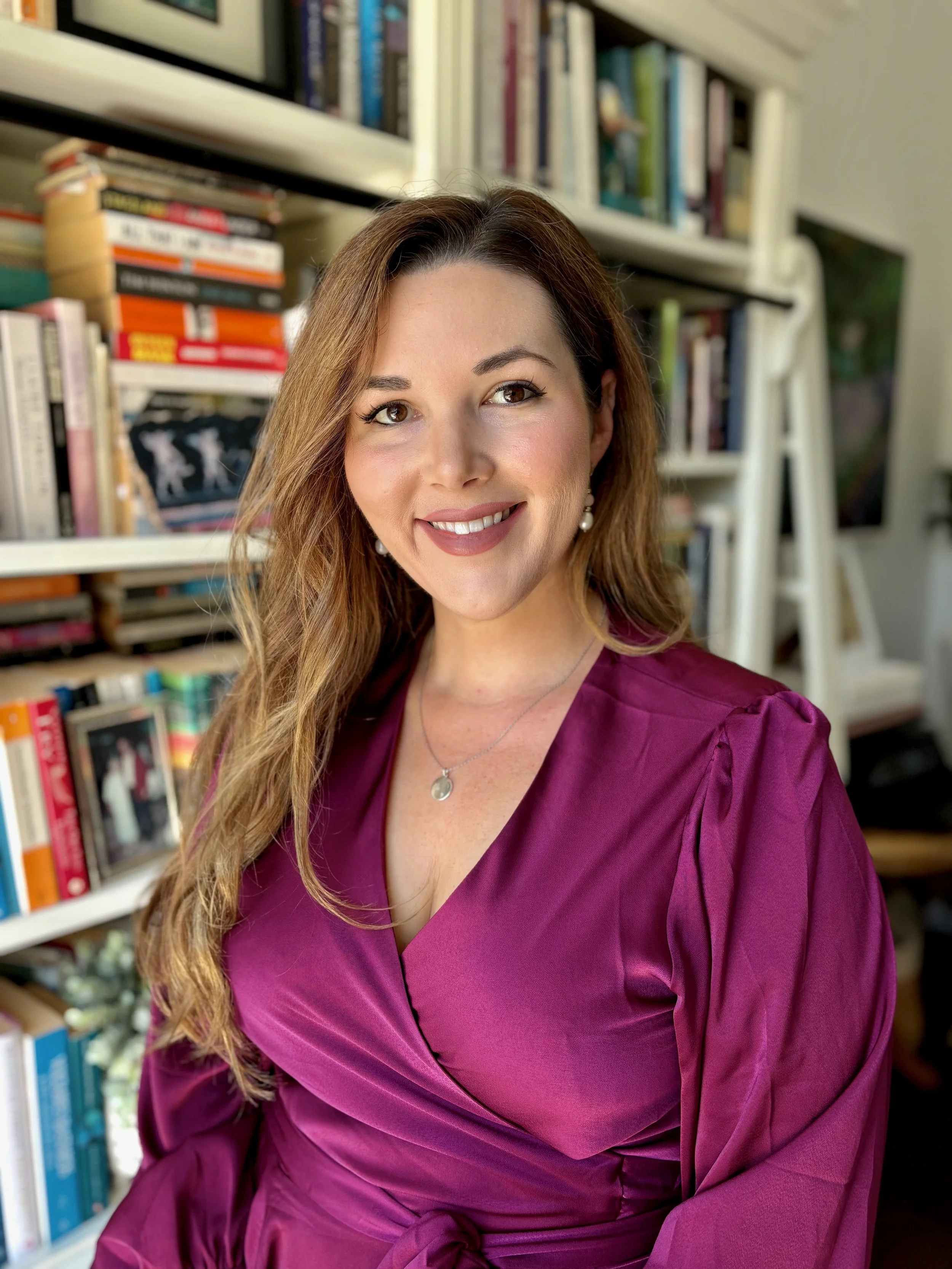
Hi, I’m Sophie
‘About’ pages are supposed to be clear, concise and straightforward, aren’t they?
But my work asks the question:
Who are we - and who have we been told to be?
As a sociologist specialising in Motherhood Studies, I explore how our identities as mothers are shaped by powerful social expectations - and how we can begin to see beyond them.
To reconnect with who we truly are, we often first have to recognise the cultural water we’re swimming in.
In my work, I call this the Fish Tank of Motherhood - a framework developed through my doctoral research that helps make visible the invisible forces shaping maternal identity.
You can hear more about it here.
I completed my PhD in Sociology at The University of Sydney (2017), specialising in Motherhood Studies.
My research explored motherhood as both a social construction and a deeply personal lived experience - particularly examining identity, maternal guilt and anger, and the cultural ideal of ‘good mothering.’
This work now underpins everything I teach.
Over the past decade, I’ve presented at international conferences across Australia, Canada, Ireland, and Greece, and contributed to academic publications in the field of matricentric feminism and motherhood studies.
My research and cultural commentary on motherhood have been featured in national and international media, including the BBC, ABC, Business Insider, Motherly, Mamamia, and PANDA.
Through these platforms, I bring a sociological lens to mainstream conversations about modern motherhood.
I translate sociological theory into practical tools for those supporting mothers, and have created The Motherhood Studies Practitioner Certification - an online, research-based training program for psychologists, social workers, counsellors, coaches and other professionals working with mothers.
The certification has been taught to over 350 practitioners across 20 countries.
I also host The Good Enough Mother Podcast, which has reached listeners in over 50 countries with over 400,000 downloads.
Through courses, mentoring and public speaking, I support professionals, business owners and creatives to rethink how motherhood is understood and how mothers are supported in our culture.
What is a ‘Motherhood Studies Sociologist’?
A Motherhood Studies Sociologist is a Social Scientist who studies Motherhood and Mothers.
So imagine a scientist in their science lab, studying a specimen under their microscope.
Well a social scientist’s lab is our society. Our ‘specimens’ for study are individuals and groups.
Our ‘microscope’ are our theories, concepts, and methodologies that we use to help interpret and make meaning from our data.
What it means to be a ‘Mother’ is shaped by social, historical, and cultural factors, and understanding this offers us important insight into understanding and interpreting the experiences of individual Mothers.
I bring this perspective to my work with both Mothers and professionals who support Mothers, teaching the sociological dimensions of Motherhood. I do this through my online courses, memberships, and podcast.
The ultimate purpose of my work is to contribute to changing the cultural conversation on Motherhood and the individual experiences of Mothers, creating a world where Mothers feel empowered, supported, and valued.
motherhood - the social
To transform how Mothers are supported in our society and how women experience Motherhood, we need cultural, economic, and institutional change. Such changes are not only for the sake of Mothers themselves, but are in the interests of our children and broader communities.
mother - the individual
I believe social change often starts with the individual. Understanding and detoxing from the toxic cultural myths of perfect Motherhood allows us to rewrite the rules of Motherhood and create incredible individual transformation that inevitably prompts social and generational shifts.
The Motherhood Revolution
My vision is for a Motherhood liberated from patriarchal structural constraints, where Mothers have agency, support, and possibilities open to them. Creating this world requires the deconstruction of dominant models of Motherhood, including ‘the perfect mother myth’, intensive mothering ideology, and martyrdom-motherhood. I believe that through this work, we can create space to imagine, (re)claim, explore, and connect to a version of Motherhood that sees women who mother as valued, powerful, and whole. Importantly, in order for Mothers to have the capacity to exercise their agency they need adequate support structures in place. This is why we cannot talk about individual transformation without understanding social transformation.
But this work of transforming Motherhood - for ourselves, our children, our clients, our communities, our families, and our legacies - it starts with us. It is an honour to guide those who are ready to step into this journey towards revolutionising Motherhood.